

 See My Latest Article on HelloNation
What does “matching by play style” mean?
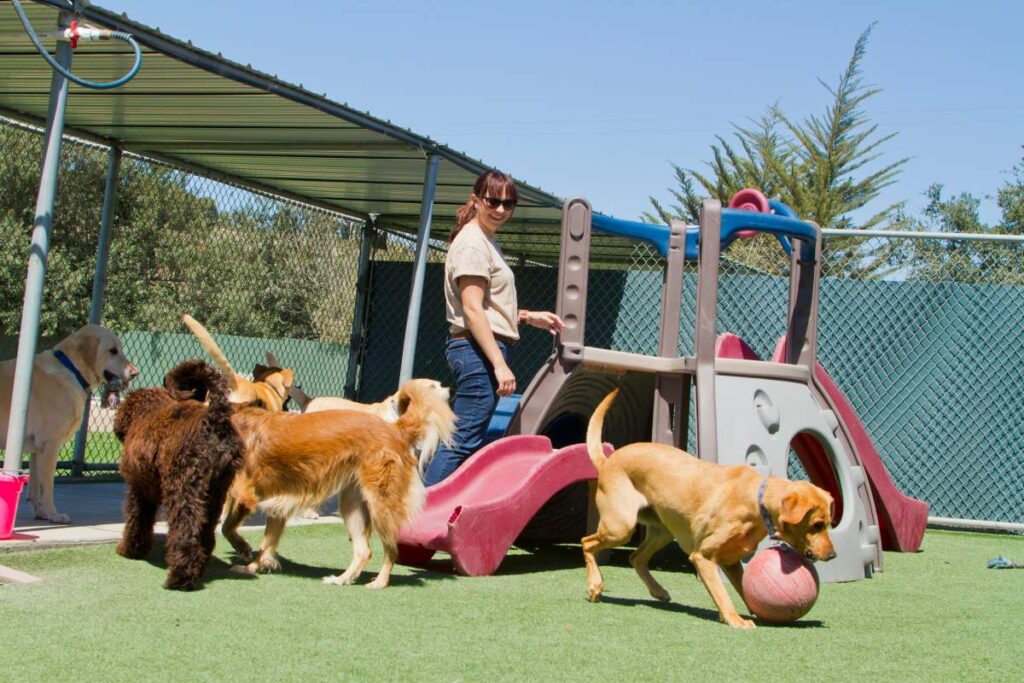
Professional dog daycares group dogs according to how they interact, not simply by breed, age, or size. Play style includes a dog’s energy level, preferred activities, communication signals, physical intensity, and ability to take breaks.
A suitable group might include several dogs that enjoy chasing, wrestling, or short bursts of activity. Another group may be better for dogs that prefer sniffing, gentle movement, parallel play, or relaxed social contact. The goal is not to make every dog play with every other dog. The goal is to create interactions that are safe, understandable, and comfortable for the dogs involved.
How is a dog’s play style evaluated?
Most reputable daycare programs begin with an intake process rather than placing a new dog directly into a large group. Staff may ask about the dog’s history with other dogs, previous daycare experiences, favorite activities, fears, age, health, and behavior around food or toys.
An evaluation may include:
- Watching how the dog approaches unfamiliar dogs
- Noting whether the dog prefers chasing, wrestling, sniffing, or following
- Observing responses to corrections from other dogs
- Checking whether the dog can pause or disengage
- Looking for signs of fear, overexcitement, frustration, or guarding
- Assessing comfort in a new building, yard, or indoor play area
The first few observations may not show the dog’s complete personality. A dog can appear unusually quiet because of travel or stress, or unusually energetic because of excitement. Experienced staff continue observing after the initial introduction and adjust the dog’s group as more information becomes available.
Which traits matter most when dogs are grouped?
Energy level is one of the clearest factors. A young dog that enjoys repeated running may overwhelm an older dog that prefers slow movement, even if both dogs are friendly. Similarly, two energetic dogs may become overly excited when placed together if neither one naturally settles.
Physical play also matters. Some dogs enjoy body-slamming, pawing, and wrestling. Others interpret that behavior as threatening or annoying. Dogs that like rough play are often grouped with companions that communicate clearly and respond appropriately when play becomes too intense.
Chasing preferences are another consideration. A dog that constantly pursues may not be a good match for a dog that panics when chased. A dog that always wants to be chased may frustrate a companion that prefers wrestling or toy play.
Staff also watch for social confidence. A confident, flexible dog may cope well with a range of play partners. A cautious dog may need calm companions and more space. Dogs that become easily frustrated may require shorter play periods, smaller groups, or more frequent rest.
Are dogs matched by size?
Size can be part of the decision, but it is not the only rule. A large dog may play gently with smaller dogs, while a smaller dog may be highly physical and difficult for a much larger companion to manage safely.
Weight, body shape, speed, and movement patterns can be more relevant than height alone. A fast, agile dog may accidentally knock over a compact dog during a chase. A large dog that uses its shoulders or paws heavily may be unsuitable for a delicate playmate, even if the larger dog is friendly.
Good grouping considers both physical safety and social compatibility. Separate size-based areas can be useful, but size alone does not guarantee a successful match.
How do staff recognize healthy play?
Healthy play usually includes turn-taking, loose body movement, brief pauses, and the ability to change roles. For example, two dogs may alternate between chasing and being chased. They may pause, shake off, sniff the ground, or return to play voluntarily.
Common signs of comfortable interaction include:
- Relaxed or wiggly body language
- Open mouths without tense facial expressions
- Play bows followed by a willing response
- Brief pauses that do not end in conflict
- Dogs choosing to rejoin the interaction
- Appropriate responses when one dog says “enough”
Play can become unsafe when one dog repeatedly tries to escape, hides, freezes, becomes stiff, or cannot disengage. Persistent pinning, cornering, body slamming, hard staring, or repeated mounting may also require staff intervention. Vocalization alone does not determine whether play is appropriate; some dogs growl during friendly play, while others remain quiet when uncomfortable. Body language and the overall pattern matter more than one sound.
Why are rest periods part of play-style matching?

A group that looks compatible at the beginning of the day may become less stable as dogs become tired or overstimulated. Rest periods help prevent excitement from building until normal play signals are ignored.
Dogs may be separated for quiet time, placed in smaller groups, or given access to individual spaces. Some dogs need frequent breaks because they become frantic after extended activity. Others can play for longer periods but still benefit from pauses for water, cooling down, and decompression.
This is especially relevant during warm, humid weather. Dogs can become overheated before they show obvious distress, particularly during repeated running or wrestling. In colder months, wet coats, icy outdoor surfaces, and limited daylight can change how much outdoor activity is practical. Indoor spaces still require ventilation, supervision, and opportunities for dogs to settle.
Can a dog’s group change over time?
Yes. Play style is not fixed for every dog. Age, health, stress, previous experiences, and changes at home can affect how a dog interacts.
A young dog may become more confident and move from a quiet group into a more active one. An older dog may need less physical play and more controlled social time. A dog recovering from an injury may temporarily require low-impact interaction. Seasonal changes can also affect energy levels, especially for households managing hot summers, cold winters, or muddy transition periods.
Staff may move a dog to a different group, shorten play sessions, add rest periods, or use one-on-one enrichment. A change in placement is not necessarily a sign that a dog is aggressive or unsuccessful. It may simply mean that another environment better fits the dog’s current needs.
What should Woodbury residents ask about daycare grouping?
Before choosing a daycare arrangement, dog owners can ask how dogs are evaluated and how groups are supervised. Useful questions include:
- Is there an introductory assessment before group play?
- How are rough play and shy behavior handled?
- Are dogs grouped by play style, energy, size, or a combination?
- How often are rest periods provided?
- What happens if a dog becomes overwhelmed?
- Can the dog’s schedule or group change as behavior develops?
- How are heat, cold, wet weather, and outdoor surfaces managed?
- How are injuries, illness, or unusual behavior documented?
Residents in a growing community with a mix of apartments, townhomes, and detached homes may have dogs with very different daily routines. Some receive extensive exercise before daycare, while others spend much of the day indoors. Sharing accurate information about a dog’s normal activity level, triggers, and social preferences helps staff make safer decisions.
What is the main sign of a good match?
A good match is not necessarily the group with the most activity. It is the group in which the dog can interact willingly, take breaks, respond to social signals, and recover from excitement.
Successful daycare grouping is an ongoing process. Staff observe behavior, manage intensity, provide rest, and adjust pairings when needed. For dog owners, the most useful question is not whether a facility offers “socialization,” but how it determines which dogs should interact, under what conditions, and when play should stop.